The Full Story
ASÉ Education


What is the problem?
We know that a total of 30% of corals have died in the nine months from March to November 2016. It is expected that in another 30 years, most coral ecosystems will collapse and the number of coral deaths will increase. The most common reasons for coral mortality include rising seawater temperatures and climate change, and the sunscreen we use.
What is happening with corals?
Beneath the ocean surface, there lies an expansive network of corals, harboring at least 25% of all marine species. Coral reefs provide a nourishing ecosystem for nautical animals and are a valuable asset that provides cultural, economic, recreational and social benefits to hundreds of millions of people. And they are dying. Coral reefs are under constant stress from climate change, pollution, overfishing, chemical sunscreens, and a myriad of other global issues. As a result, over 50 percent of the world's coral reefs have died in the last 30 years and up to 90 percent may die within the next century.
Coral bleaching is the common result of these problems, as corals are sensitive creatures who are easily affected by the environment around them. Corals are vibrant due to the microscopic algae called zooxanthellae that live within the coral. Yet, when the habitat of the coral is slightly altered, the corals expel the algae and turn into white transparent color. Without the algae, the coral along with the entire ecosystems that rely on the coral will die.

How does our sunscreen help?
Our Asé reef-friendly sunscreen is created specifically to minimize the negative effects on the coral reef and its ecosystems. Non-coral reef sunscreens often include chemicals such as Oxybenzone and Octinoxate which are harmful to coral reefs by causing the coral reefs to be bleached and shut coral growth. By choosing Our Asé coral reef-friendly sunscreen, people can help protect the coral reef ecosystems.
Furthermore, Our Asé coral reef-friendly sunscreen can benefit people as well. Our sunscreen provides effective protection against harmful UV rays and prevents sunburn. By using our Asé coral reef-friendly sunscreens, individuals can enjoy outdoor activities and beach vacations while being mindful of their impact on the environment.
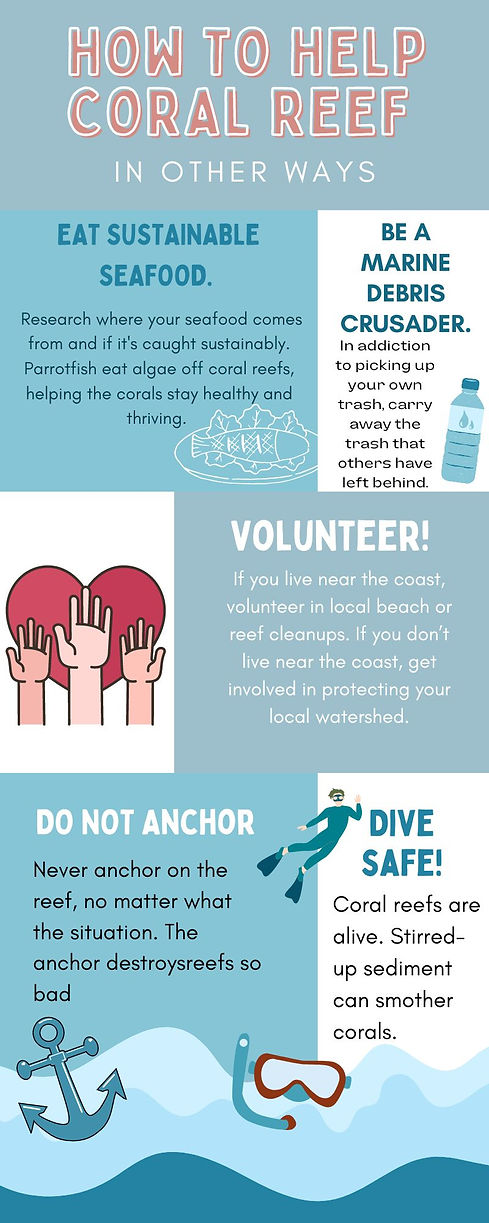
Ways to help corals:
Plant Trees
Plant the trees. It is not such a big deal but helps a lot. It does not mater are you living near with ocean/sea or not it always helps to safe reefs. The planting trees/other plants
helps reduce the runoff that goes into the water. Trees also help limit the increasing planet temperatures, which have a negative impact on the oceans and coral reefs.
Report Illegal Behavior
Report anyone you witness throwing chemicals or another substance into the water immediately. If the authorities are unaware of the situation, they are powerless to intervene.
Start Recycling
Be the change you wish to see in the world, particularly with regard to the environment. Always begin recycling, even if it requires a little more work. Most likely, your municipality has a recycling program that makes it very simple to properly dispose of things like glass, paper, cardboard, and other materials.
Leave no trace.
Keep unwanted fishing nets and lines out of the water and off the beach. Any kind of litter can harm the reef and fish by polluting the water.
Conserve water.
Use water you actually need. Your usage of water, particularly when outdoors, will affect how much runoff and wastewater our seas are exposed to. Get the word out!Inform your loved ones about coral reefs, and get in touch with your local representatives to find out what your state is doing to safeguard them. Take your class on a virtual field trip to a coral reef if you're a teacher!
Minimize use of fertilizers.
Because nutrients (nitrogen and phosphorus) from fertilizers used excessively on lawns wash into waterways and eventually end up in oceans, this has a negative impact on water quality. Coral reefs may be harmed by certain pollutants of the sea. Practice eco-friendly lawn care.Even though you might reside thousands of kilometers from a coral reef, the items you use on your lawn will eventually enter the water supply. Use eco-friendly insecticides and fertilizers to avoid damaging coral reefs and other marine life.
Protect Coral Reefs!!!
